
A Blowout That Blows Up the Plan
Semi tire calls on I-35 can look routine at first. A driver reports a steer tire failure, asks for a tire swap, and expects to roll again after the replacement. On one call just south of Jarrell, we arrived to find the tire gone, the fender bent into the wheel well, and an air line torn loose near the front axle. That truck was not moving without I-35 semi towing.
A blown tire on a loaded vehicle can leave more than rubber on the road. Debris can wrap into brake lines, rip wiring, tear mudflaps off their mounts, and crack plastic guards near fuel tanks. If the truck loses air pressure or cannot steer without metal grinding into the wheel, a roadside tire change will not fix the real problem.
Roadside Tire Service Has a Limit
Roadside tire service works when the failure is clean and the truck still functions. A drive tire blows on a wide shoulder near Georgetown, the air system holds, the brakes release, and the driver has room to pull forward. That kind of call may only need a service truck and thirty minutes.
The decision changes when the shoulder is narrow, the truck leans toward the ditch, or the damage reaches past the tire. A steer blowout can bend sheet metal into the wheel well so a replacement tire will not fit. A torn air line can keep the brakes from releasing. At that point, the truck has to move before repairs can start.
What We Check Before Moving the Truck
Air and brakes come first. Most commercial truck brakes depend on air pressure, so a torn line or cracked fitting is a serious problem. A driver who tries to limp forward with low air can lock a wheel, overheat a brake drum, or ruin a rim. We have seen short moves create much bigger repair bills.
Before we set up, we confirm:
- Which tire failed
- If the truck can build and hold air
- If brakes, steering, or suspension are damaged
- How much shoulder space is available
- If the trailer is loaded or empty
- Where the unit needs to go next
When the Wrecker Is the Better Choice
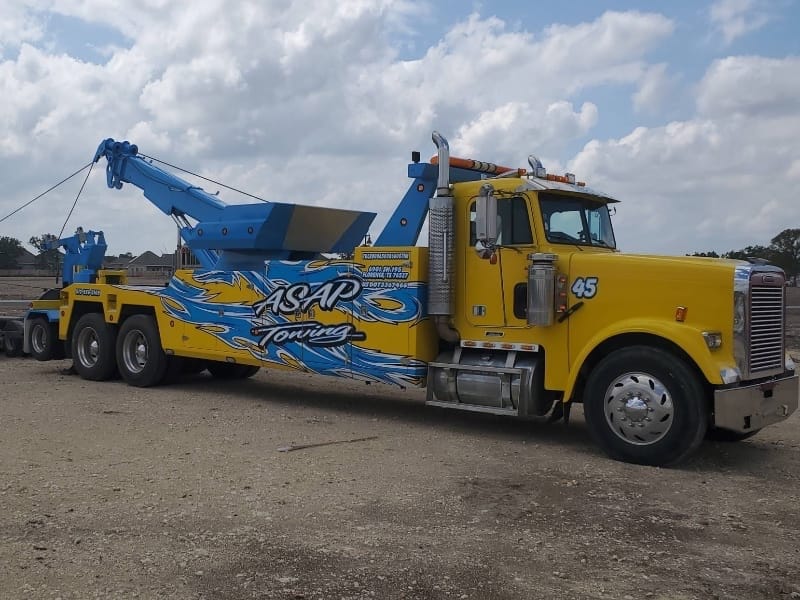
Towing makes sense when the truck cannot move under its own power without causing more damage. That might mean a bent rim, leaking air line, locked brake, broken suspension, or damaged steering. A loaded trailer sitting partly in the lane makes the call more urgent because the truck needs to leave the roadside without creating another problem.
The setup depends on what failed. I-35 semi towing may mean lifting the damaged axle, moving the tractor only, or towing the full combination. If a damaged wheel is dragging, we do not want it rolling for miles. If the suspension is broken, we have to manage the weight so the frame does not take more abuse during the lift.
Load, Shoulder, and Hookup
On I-35 semi towing calls, road position can matter as much as the tire damage. A truck fully on the shoulder gives us options. A rig leaning into the grass near an on-ramp or sitting halfway in the slow lane near Florence gives us less room and less time.
Cargo changes the plan too. A loaded reefer may need to keep moving, while an empty dry van gives us more flexibility. A hazmat load may require a different destination. I-35 semi towing after a blowout starts with the tire, but the load, shoulder, and damage decide how we move the truck.
ASAP Towing Handles I-35 Semi Towing When Tire Damage Gets Worse
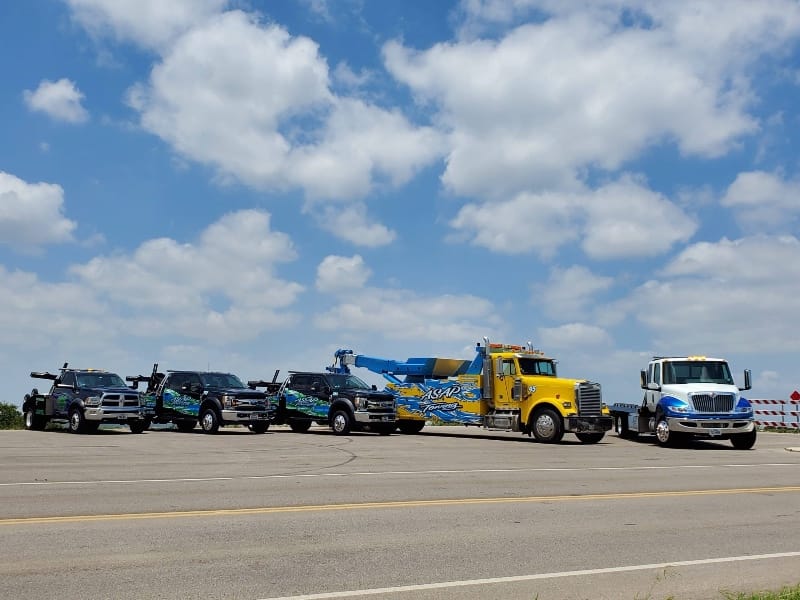
ASAP Towing started in July 2004, and we have spent the last twenty years building a fleet for hard commercial calls. Our OSHA-certified operators work with the Texas Department of Transportation, the Department of Public Safety, and law enforcement across Georgetown, Jarrell, Florence, Liberty Hill, Lampasas County, Copperas Cove, Coryell County, and Fort Cavazos. Our I-35 semi towing work covers bobtail tractors, loaded combinations, and trucks with damage that goes beyond the tire.
When a blowout turns into brake damage, air loss, or suspension trouble, our dispatchers ask the right questions before sending a truck. I-35 semi towing starts with what failed, where the rig is sitting, what it is hauling, and where it needs to go. On I-35, one bad tire can block a lane fast, especially near ramps and work zones.
FAQs
Can a blown semi tire damage brake lines?
Yes. Shredded rubber can hit brake lines, air fittings, chambers, and wiring near the wheel area. If air pressure drops, the truck may not be able to move safely.
How do I know if a tire blowout needs a tow?
A tow may be needed if the truck has air loss, a bent rim, damaged steering, locked brakes, or broken suspension. A narrow shoulder can also make roadside service too risky.
Is it safe to drive a semi after a tire comes apart?
Usually, no. Driving on loose rubber or a damaged rim can ruin brakes, hubs, wiring, and suspension parts. Stop as soon as there is a reasonable place out of traffic.
Why does a loaded trailer affect the recovery plan?
A loaded trailer adds weight and limits the ways the truck can be moved. The crew may need to tow the whole combination or arrange for another tractor.
What should I tell dispatch after a semi tire failure?
Give the nearest marker, travel direction, failed tire position, trailer type, load status, and visible damage. Photos help the crew choose the right truck.
Can a mobile tire service fix a blowout on the shoulder?
Yes, if the tire failed cleanly and the truck is parked in a workable spot. If the tire damaged other systems, a mobile tire repair may not be enough.