

From Parked to Problematic
Most roadside calls come from circumstances a driver could not control: a blowout, a collision, a sudden mechanical failure. But some of the Georgetown towing calls we handle are for vehicles that were operable when parked and are not when the driver returns weeks or months later. That shift happened during storage, and it did not have to. Storage damage comes from the absence of events rather than from any single incident: the absence of starts, drives, heat cycles, and movement. Each of those absences carries a cost, and the total bill shows up the day the driver tries to leave. Most storage-related failures respond to a few straightforward steps before parking.
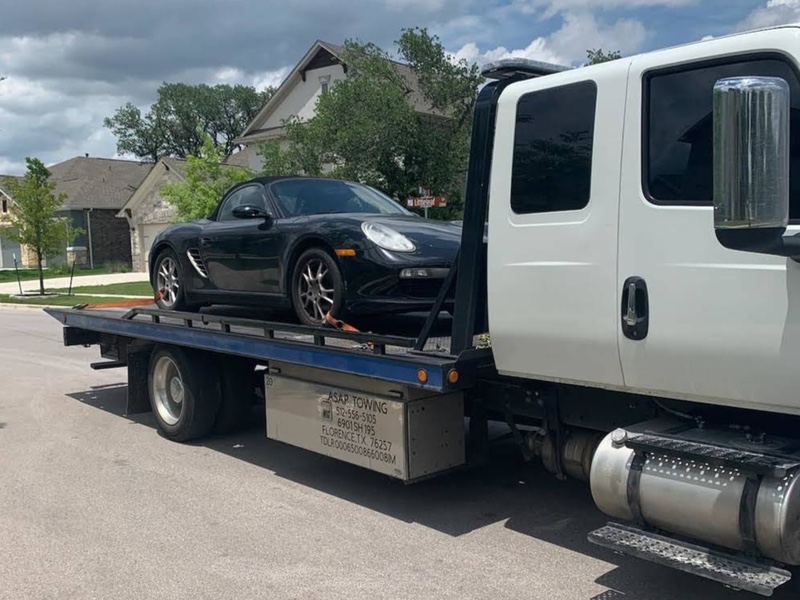
What a Car Loses While It Sits
A vehicle in storage loses exactly what it gains from regular use: circulation, heat, movement, and charge. Engine oil settles and its additives degrade without the heat cycling that keeps them active. Gasoline, particularly ethanol-blended fuel, breaks down into varnish residue that settles into fuel lines and injectors within the first few weeks.
The electrical system does not wait long. Modern vehicles carry parasitic draws from computers, security systems, and clocks that drain the battery steadily even when nothing is running. Most batteries fully discharge within six to eight weeks without a maintainer or regular starts. A battery that fully discharges more than once loses capacity permanently, which is why storage calls that start as a dead battery often end with a replacement rather than a recharge.
How to Read the Signs Before You Drive
Starting Behavior and Battery State
A slow crank, a click with no start, or a starter that labors to turn over all indicate a depleted or damaged battery. If the vehicle starts but immediately stalls, the problem shifts to the fuel system. Ethanol-blended fuel sitting for more than 60 days may have oxidized or phase-separated to the point the engine cannot sustain a run on it. Either situation calls for a Georgetown towing call rather than a drive.
Brake Feel and Rolling Resistance
Brake rotors develop surface rust quickly in humid air. Light rust clears with a few firm stops, but heavier oxidation from weeks of storage changes brake feel noticeably: a grabby pedal, vibration under braking, or a pull to one side. Tires resting on the same contact patch lose pressure and can develop flat spots. A vehicle that pulls significantly, vibrates at low speed. Or it has an unusual brake pedal after storage and you should not drive it at highway speed before inspection.
Fluid, Rubber, and What Leaks Tell You
Rubber hoses, gaskets, and seals dry and harden during storage, and the first start puts immediate heat and pressure on components that may have cracked at their connection points. A coolant hose that seeps at a fitting, an oil seal that weeps, or any visible drip beneath the vehicle after the first cold start are signs to stop and assess. Georgetown towing calls after a failed drive often trace back to a rubber component that was not inspected before departure.
If your stored vehicle shows any of the following, a Georgetown towing call is the safer move before you attempt to drive it:
- The engine cranks slowly, clicks, or will not turn over at all
- The vehicle starts but stalls immediately or runs too roughly to keep moving
- The brake pedal feels hard, soft, or pulls toward one side under normal pressure
- Visible fluid has appeared under the vehicle after the first cold start
- Tire pressure is significantly low or flat spots cause noticeable pulling or vibration
ASAP Towing: Georgetown Towing That Gets You Out of a Storage Situation
ASAP Towing and Heavy Duty Semi Truck Wrecker has handled Georgetown towing calls since 2004, and vehicles that have been sitting too long are a consistent part of our daily work. With OSHA-certified operators, 24/7 dispatch, and a fleet running from light-duty rollbacks to an 80-ton NRC slider, we match the right equipment and respond any time.
A Georgetown towing call for a stored vehicle does not have to turn complicated when the right team shows up. ASAP works alongside TxDOT, the Department of Public Safety, and law enforcement partners across the region. Call us before you try to drive it and let us handle the rest.
FAQ
How do I know if my fuel has phase-separated before I try to start the car?
There is no reliable visual way to identify phase separation in the tank. The most telling sign is behavioral: the engine cranks but will not catch, or starts and stalls immediately despite a good battery. If the vehicle was stored for more than 60 days with a partial tank and no stabilizer, phase separation is worth assuming before the first start attempt.
Can a depleted battery be recovered with a standard jump start?
A jump start may get the engine running, but it does not restore a depleted battery. The alternator will recharge the battery while the engine runs, but a deeply discharged battery often cannot return to full capacity through alternator charging alone. A slow recharge through a proper battery charger is more effective, and a battery that has been fully discharged multiple times typically needs replacement.
What causes brake rotors to feel grabby after storage?
Rotors are cast iron and oxidize quickly when exposed to air and moisture. A thick rust layer from extended storage changes how the pad contacts the rotor surface, creating uneven pressure that produces a grabby or pulsing sensation under braking. This typically clears as the rust layer wears off through normal stops, but a severe enough buildup can affect stopping distance until it does.
Is it safe to drive a stored vehicle a short distance to test it?
A slow drive in a parking lot at low speed is a reasonable first step. It lets you test the brakes, check for unusual tire behavior, and listen for anything unexpected under the hood. Driving at highway speed before those checks creates risk, particularly if the brakes are affected by rotor rust or a tire is significantly flat-spotted from months of sitting.
Does starting a stored vehicle and letting it idle help maintain it?
Less than most drivers assume. Idling does not bring the engine to full operating temperature and does not charge the battery effectively. It also introduces exhaust moisture without burning it off, which can promote corrosion in the exhaust system. A short drive at normal speed is significantly more beneficial to the overall health of a stored vehicle than extended idling.
What is the risk of driving a stored vehicle before inspecting it?
The main risks are brake failure from rusted rotors, tire issues from flat spots or significant pressure loss, and cooling system failure from a hose that did not survive storage. Any of these can put a driver in a bad situation on the road. A pre-drive inspection of tires, brakes, fluids, and rubber components takes a few minutes and eliminates most of the risk.