
Tow Big or Go Home
Not every call ends with a simple tow and a short drive to the nearest lot. Some loads require a completely different category of response. A much larger one, where dimensions, condition, and corridor requirements all have to be mapped out. But before any equipment moves. An I-35 heavy transport is exactly that kind of job. The outcome depends almost entirely on the quality of the plan built before the first truck rolls.
We respond to the full range of heavy transport needs on this corridor. The common thread in all of them is preparation. What we know going in determines what we bring and how we execute.
Building the Information Picture
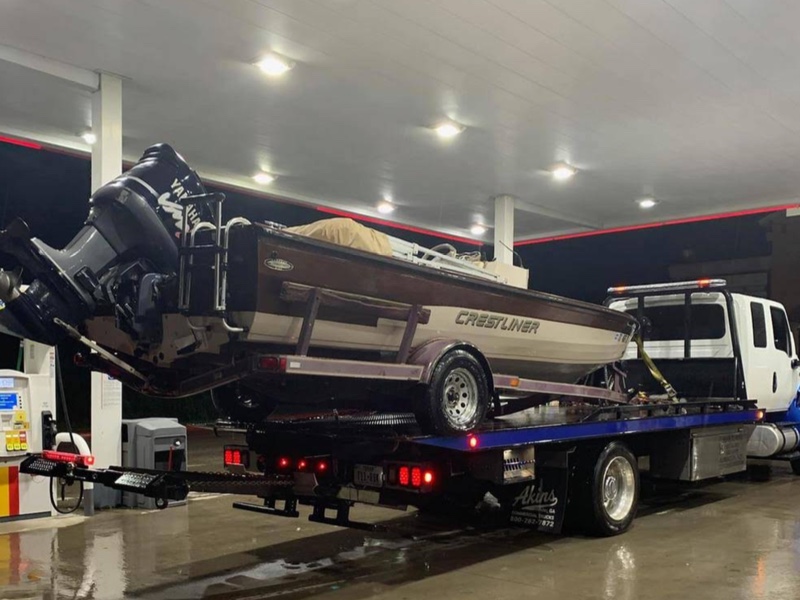
For an I-35 heavy transport, we lock in the key measurements from the unit itself. That includes height, width, length, and overall condition. We ask about damage to the frame, suspension, or axles, and we confirm if the unit is loaded, partially loaded, or empty. Those details determine the rigging approach, the axle load profile, and the permit requirements for the move.
Weight sits at the center of every I-35 heavy transport decision. Gross weight is the starting number, but the distribution of that weight across axle groups is what determines the legal route. A tipping unit, off-center cargo, or damaged suspension can shift axle loads significantly, and we plan for those variables before the first truck arrives on scene.
The Checklist That Makes the Move
Route Selection and Clearance
Every heavy route gets built around the lowest clearance point, measured conservatively. We keep a buffer in place because road angles, surface changes, and approach geometry all reduce effective clearance from what is posted. The route must work at the load’s true high point, confirmed in the field before the move begins.
Access and Staging Conditions
Large equipment requires adequate space to work safely. We ask about the staging area at both pickup and delivery, including shoulder width, surface condition, and any obstacles in the work zone. Tight access at either end changes the equipment selection and the setup approach, and we want to know about it before we arrive.
Load Classification and Permits
A vehicle or piece of equipment that exceeds legal limits for weight, height, width, or length must travel under a permit for an I-35 heavy transport. The permit establishes the approved route, the travel window, and escort requirements. We manage that coordination as a standard part of every heavy move.
Before any move begins, we lock in:
- True height and width, including extensions, raised components, or attachments
- Gross weight and axle distribution, adjusted for damage or uneven loading
- Frame and suspension condition, including any factor that changes the load profile on the equipment
- Staging access and ground conditions at both ends of the move
- Route restrictions including clearances, weight limits, and active construction zones
ASAP Towing Gets Every I-35 Heavy Transport Done
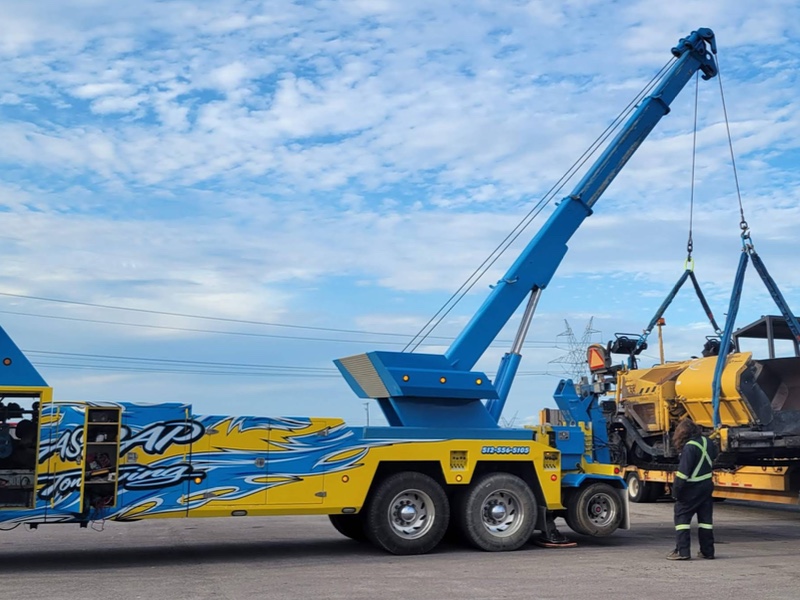
ASAP Towing has operated along this corridor since 2004, and I-35 heavy transport is core to what we do. Our fleet is built for every level of heavy work: conventional wreckers, rollbacks, rotators for complex recoveries, and our NRC slider with 80-ton capacity for the heaviest loads. Many of our operators are OSHA-certified. We run 24/7, and our partnerships with the Texas Department of Transportation and the Department of Public Safety mean we know this corridor well.
When an I-35 heavy transport requires a permitted oversize move, ASAP Towing has the equipment and experience to finish it. We maintain active relationships with law enforcement and municipalities across the region, from Georgetown and Jarrell to Lampasas County and Copperas Cove. With ASAP Towing, no job goes unfinished.
FAQ
What is an NRC slider and when is it used for heavy transport?
An NRC slider is a heavy-duty recovery unit capable of handling extremely large loads. It operates like an oversized wrecker and is used for the heaviest recoveries where standard heavy-duty equipment does not have sufficient capacity. It is the tool of last resort for the most demanding jobs on the road.
How do towing teams handle a semi-truck that cannot roll under its own power?
A truck that cannot roll is typically loaded onto a lowboy trailer, transported on a tilt deck, or rigged with dollies to allow controlled movement. The approach depends on what is damaged and how the drive and steer axles are affected. We assess that before selecting equipment.
What are the most common causes of delay in a heavy transport operation?
Inaccurate measurements that require permit revisions, access issues at the pickup or delivery site, and unanticipated ground conditions are the most frequent causes. Getting the right information at the start of the call shortens the time from dispatch to delivery.
Do heavy transport permits cover a specific route or a general area?
Permits are route-specific. They identify the exact path the load is approved to travel, along with any restricted hours, required escorts, and bridge or construction zone conditions. Deviating from the permitted route can create legal exposure for the carrier and the towing company.
What types of loads typically require a rotator for recovery?
Overturned trailers, jackknifed rigs, loads hanging over embankments, and any situation where the vehicle needs to be repositioned before it can be uprighted or towed. Rotators are also used when obstacles prevent a conventional wrecker from getting into position.
How does damage to a trailer affect the towing and transport plan?
Trailer damage changes the axle configuration, ride height, and rolling ability of the unit. Collapsed axles, bent frames, and blown-out tires all affect how the load sits on the transport equipment and how weight distributes across axle groups. We ask about damage first because it determines the entire setup.